
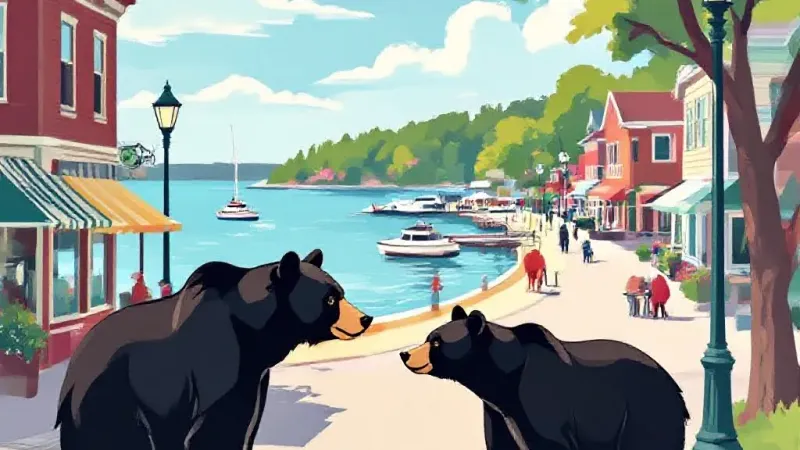
Sleeping Bear Dunes National Lakeshore will be the site of a new study focused on its black bear population and diet. The project is supported by a round of National Park Foundation innovation grants, announced on October 20. The primary goal of the research is to better understand the increasing bear population within the Lakeshore and to develop strategies to mitigate conflicts between bears and people, especially as encounters between visitors and bears become more frequent.
The Friends of Sleeping Bear Dunes will lead the study, employing noninvasive DNA analysis from collected bear hair. According to the National Park Foundation, this method will provide valuable insights into the growing bear population. Researchers will use hair snares to gather samples, allowing for DNA collection without directly handling or harming the animals. The genetic information obtained will enable researchers to identify individual bears and gain a deeper understanding of the overall population dynamics at the Dunes.
Beyond population tracking, the study will also meticulously examine the bears’ diet. This dietary information is crucial for guiding efforts to manage the bear population effectively and further limit potential conflicts with people. Park officials at Sleeping Bear Dunes anticipate that the study's findings will enhance their understanding of the local bear population. This improved knowledge will facilitate coordinated management efforts with both state and tribal partners, who are essential stakeholders in regional wildlife management.
This local initiative is part of a broader allocation of $12 million in grants, supporting 30 distinct projects across the entire National Park System. More than 40 national parks are set to benefit from these grants, which are strategically focused on critical areas such as natural resource management, enhancing visitor experiences, and ensuring public safety. The National Park Foundation indicated that these projects are specifically designed to address challenges unique to individual parks, while simultaneously developing approaches that possess the potential for adaptation and implementation in other national park settings.
The latest infusion of funds brings the National Park Foundation’s total investment in innovation grants for 2026 to nearly $25 million. The foundation reviewed more than 200 proposals this year, demonstrating significant interest in innovative conservation and management solutions. Further opportunities for funding are on the horizon, as the foundation plans to open applications for another round of projects in the coming months. These grants are made possible through the generous contributions of various donors and partners. These include Lilly Endowment Inc., Peter and Betsy Chung, Robert and Kitty Brunswick, Cody J. Smith, The Ball Foundation, and Arconic Foundation.
In the announcement regarding these grants, Mike Reynolds, Chief Program Officer for the National Park Foundation, emphasized the significance of ongoing innovation for the future of national parks. He underscored that national parks have historically represented "a bold idea," and their continued viability relies heavily on such forward-thinking approaches.